
Hockwold Hall

Domesday Book
Hockwold is mentioned in the Domesday Book of 1086 and it is said that there was a property on the site belonging to William De Warenne before passing it to Alveva, the wife of the Earl of Mercia.

Poynings Barony
By 1323, the manor at Hockwold and several other properties in Norfolk were owned by Michael de Poynings. After the Battle of Crécy (1346), Michael was granted a knighthood and in 1348 he was summoned to Parliament to become the 1st Baron Poynings. Robert Poynings, 4th Baron, had three sons and by his second wife, a daughter, Eleanor. Eleanor married Henry Percy, 3rd Earl of Northumberland.

Robert Lord Poynings, upon his death the Jury of Henry VI found him to have held this manor of Hockwold cum Wilton, and the advowson of the church of Hockwold, two messuages, 200 acres of land, 10 of meadow, and 100s. rent, of the manor of Castle-Acre and in 1464, Elizabeth Lady Poynings presented to the rectory, as lady of this manor. Elizabeth married Sir Robert Poynings in 1459, aged 29. Poynings was part in Cades Rebellion and had been a carver and sword bearer to Jack Cade. He had received a pardon although he had sufficient money and property to satisfy Agnes. Elizabeth recieved a dowry of 400 marks as part of her father’s will. Unfortunately Poynings was killed two years later at the second Battle of St. Albans while fighting for the Yorkists.

In 1483 after the death of Edward IV, Edward (age 24) led an uprising in Kent against Richard III and had to flee the country, but returned in 1485 to be knighted and serve Henry VII in the Netherlands, France and Ireland. He was sent to Ireland as Lord Deputy in 1494-5 to establish “Poynings Law”, whereby Irish administration was made directly dependent on the English Crown and privy council. In 1497 he was presented to Hockwold church as Lord Warden of the Cinque-ports, and thereafter he was employed in negotiations with England’s allies on the continent. When he died in 1521, he had no surviving legitimate children, so Henry Percy, 5th Earl of Northumberland was found to be cousin and heir.

Henry Percy – 6th Earl of Northumberland
Henry Algernon Percy, 5th Earl of Northumberland (1478–1527), inherited the estate of his cousin, Sir Edward Poynings in 1521. His eldest son, Henry Percy, loved Anne Boleyn, but his father considered her ‘a mere knight’s daughter, and not an appropriate fit for his son and heir’. He married Lady Mary Talbot, daughter of the Earl of Shrewsbury, but quickly became estranged from her, and since they had no children and his brothers had been implicated in the Pilgrimage of Grace (1535), he bequeathed his entire inheritance to the King. The 6th Earl died in 1537, and a nephew inherited the title, but the Hockwold properties came to the Crown, to be purchased by Sir Thomas Tindale.

Tudor House
Sir Thomas Tindale had purchased “Poynings Manor” shortly after the death of his father in 1539, to become the new family seat, and the ‘Tudor House’ was probably completed well before his death in 1583. It is E-shaped, brick with stone quoins and plinth chamfers, and a stone octagon tower at the rear that was the original staircase
The stone may have come from nearby Bromehill Priory, which was closed in 1528, with the contents and materials sold, with the proceeds going to Cardinal Wolsey’s proposed college at Ipswich.

Sir William Paston
William Paston, 1st baronet, (1528–1610) was the father of the first Earl of Yarmouth. He studied at Gonville Hall, Cambridge, He served as the Sheriff of Norfolk and Suffolk between 1565 and 1556 and received a knighthood in August 1578.

Sir Thomas Tindale or Tyndall (1505-1583) was the eldest of nine children born to Sir John Tindale (1486-1539), who in turn was heir to Sir William Tindale (died 1496) and his wife Mary, who inherited the Mundeford-Ingeldesthorp properties. Sir William, was also, through his maternal great-grandmother, declared heir to the Crown of Bohemia in 1501. He declined the offer to become King. Later on, Thomas’s son Humphrey, Dean of Ely, was also offered the crown and also declined.

Sir William Hevingham
High Sheriff of Norfolk in 1633 and Member of Parliament from 1640, and during the Civil War 1642-51. Commissioner of the court that in 1649 tried Charles I, but he was one of those who refused to sign the execution warrant. After the Restoration in 1660, he was found guilty of treason but successfully petitioned for mercy and was imprisoned in Windsor Castle in 1664 until his death in 1678, but his property was attainted.

Edward Proger MP
Groom of the Bedchamber. In 1661 Charles II gifted Hockwold to a group of courtiers, who sold the title to Sir John Crofts, 1st Baronet of Stow, son of Anthony Crofts, who was second son of Sir John Crofts of Saxham. Since Stow had been inherited by his cousin, William, it appears that Sir John intended Hockwold to be his new home. But he died sans issue in 1664, aged 29. By 1677, Sir John’s Executor, Edward Proger was leasing Hockwold to Sir Cyril Wyche , who purchased it in 1690 for £12,000 (£2.7m in today’s money).

Sir Cyril Wyche
Sir Cyril Wyche married to Elizabeth, daughter of Sir Thomas Jermyn of Rushbrooke in 1663 and in 1664 their first son, Jermyn was baptised at Hockwold. This son did not survive, and their second son, also Jermyn, was born c1670. Sir Cyril had been a founder member of The Royal Society in 1661, and its President in 1683-4 and served on its council in the 1680s and 1690s, and was President of the Dublin Philosophical Society 1693. His wife Elizabeth died in 1678, and he married Susanna, Lady Perrott 1684, She died in 1690 and he married Mary Evelyn 1692. Sir Cyril Wyche was a Member of Parliament for Callington 1661-79, East Grinstead 1681, Saltash 1685-87, and Preston 1702-05. He was a Privy Councillor and Chief Secretary of Ireland in 1676–85 and again 1692–93, latterly also MP for Trinity College, Dublin. In 1693-95 he was appointed Gentleman of the Privy Chamber and a Lord Justice of Ireland. He remained an Irish Privy Councillor till his death in 1707.

After the death of Sir Cyril Wyche in 1707, ownership passed to his son Jermyn Wyche (c1670-1720), MP for Fowey. He left the property to his only son, also Cyril Wyche (b. 1707), High Sheriff of Norfolk in 1729, and also knighted. His initials appear on the stable block with the date 1757. On his death in 1780, the property then passed to his nephew Cyrill (sic) Clough, son of his sister Mary (d. 1758) and Robert Clough of Feltwell (d. 1777).

Edward Billingsley is recorded as being at Hockwold Hall in 1786 and being there as High Sherriff of Norfolk in 1787, presumably as a tenet of Cyrill Clough. His will puts him still at Hockwold in 1814, well after 1805 when the property passed to Cyrill’s daughter Catherine.

Archbishop of Armagh, Primate of Ireland
Cyrill Clough married Mary King at Feltwell in 1777, and had two sons, who predeceased him, and four daughters. On this death in 1805, his youngest daughter Catherine inherited the Hockwold property and she married Rev William Newcome in 1808. William Newcome was the son of the Archbishop of Armash and together Catherine and William had the wealth to acquire several newly enclosed lands in Hockwold and elsewhere.

Three crescents (Newcome) charged with a fesse wavy between three leopard faces (Clough)
It seems that by the early 19th century, Poyning’s Manor became known as Hockwold Hall, and the western part of the Tudor house was remodelled with Georgian windows to the west and south. The escutcheon over the front door has the shield of Newcombe charged (overlain) with that of his wife, Clough, and thus dates from the period when the house was remodelled.

Detail of a brass memorial to Newcombe in the chancel of St Mary’s, Feltwell. The arms of Newcome impaled (side by side) with Clough are on the right. Rev William Newcome died in 1846, by which time he had become the principle landowner in the village. Rev William Newcome was not Rector at Hockwold but instead was the imcumbent of several other parishes, including Sutton in the Isle of Ely.
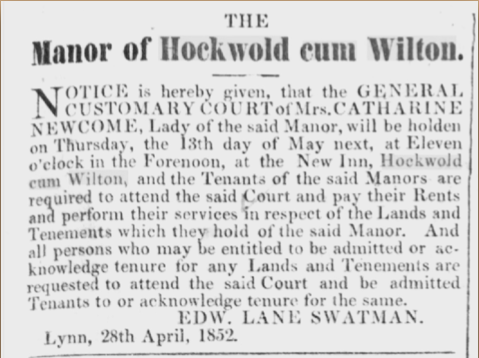
Catherine’s son Edward Clough Newcome, inherited Feltwell Manor from Catherine’s unmarried elder sister Plesance Clough in 1851. After the death of her husband in 1846, Catherine Newcome, was for the next 29 years (till 1875), Lady of Manor.

1851 Census of those living at Hockwold Hall
In 1851, Catherine presided at Hockwold with Edward, his wife Amelia*, three young children, and 10 servants. In the 1871 census she was with her son (but not his wife and children) at the Rectory, Boothby Pagnall in Lincolnshire. And in 1875, her death was registered at Grantham, aged 88 years. Edward had died in 1871, and his nephew Francis D’Arcy William Clough Newcome inherited the Hockwold Estate.
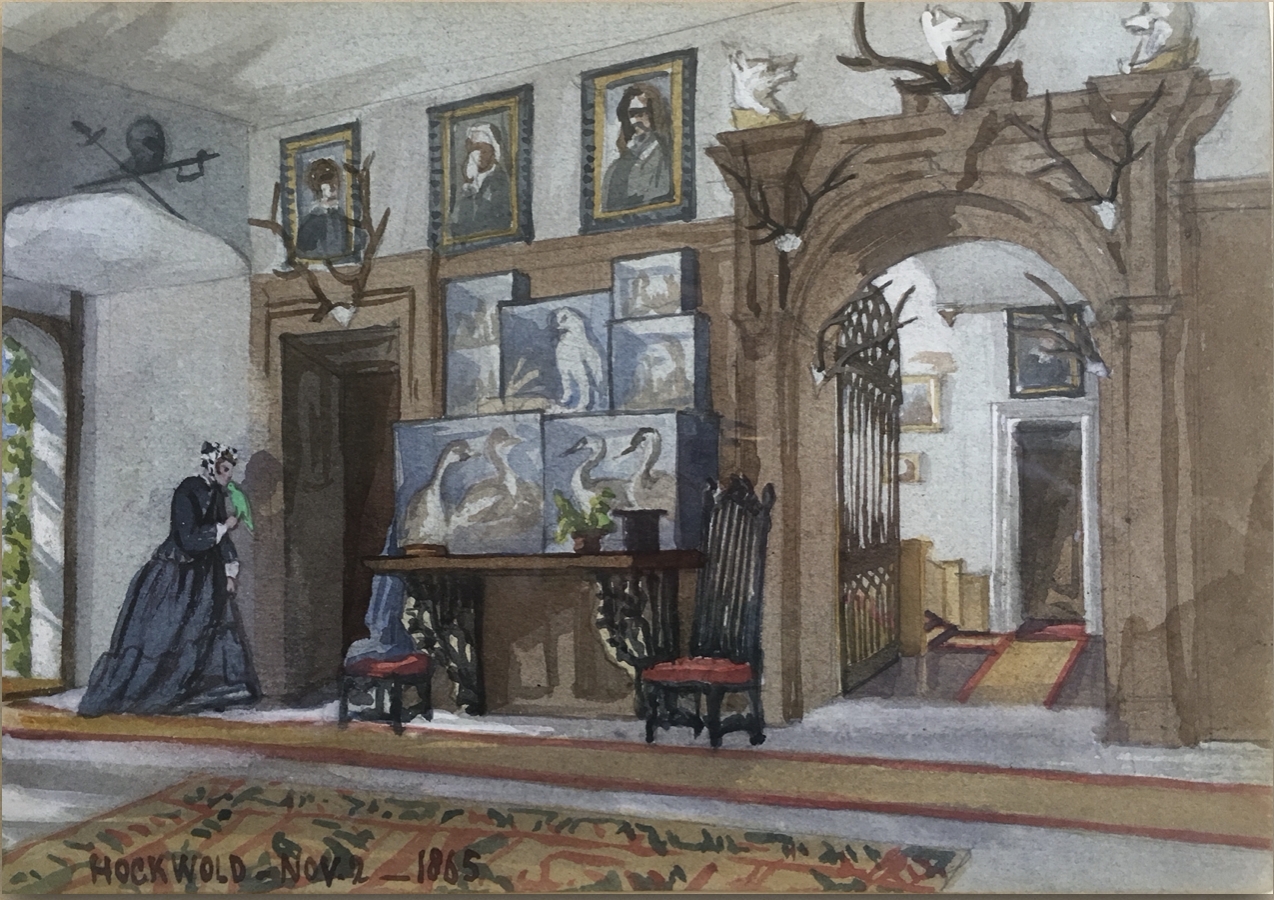
Watercolour by Caroline Vernon, née Fazakerley (fl.1829-1868)
2-Nov-1865 The present dining room, much as it is today, with Catherine Newcome 78, and some of her son Edward’s collection of birds.

DUM SPECTAS FUGIO (Whilst thou lookest I fly)
The hour lines have both Roman and Arabic numerals. Hyperbolic declination lines are marked with the signs of the Zodiac to tell the time of year (in summer). Apparently the motto and perhaps the whole dial, is a copy of one of four dials on the market house (or ‘cross’) at King’s Lynn, erected 1710, and still extant there in 1890.

HH Crown Prince Victor Duleep Singh (1866-1918)
By 1861, Hockwold Hall was no longer the main residence of the Newcome family. Prince Victor, godson of Queen Victoria, and the son of the last Maharajah of the Sikh Empire and his brother, Prince Frederick (1868-1926), came to live at Hockwold in 1894, shortly after the death of their father. Maharajah Duleep Singh had lived at Elveden from 1863 till his death in 1893, when it was sold to pay his debts. The Princes’ mother was Bamba, daughter of Ludwig Müller, a German merchant banker and Sofia, his Abyssinian mistress. The Maharajah met Bamba in Cairo and they were married in Alexandria in 1864.
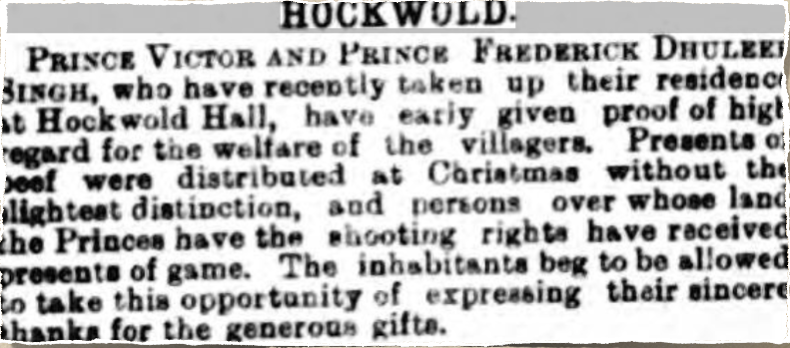
Thetford & Watton Times and People’s Weekly Journal, 29 Dec 1894
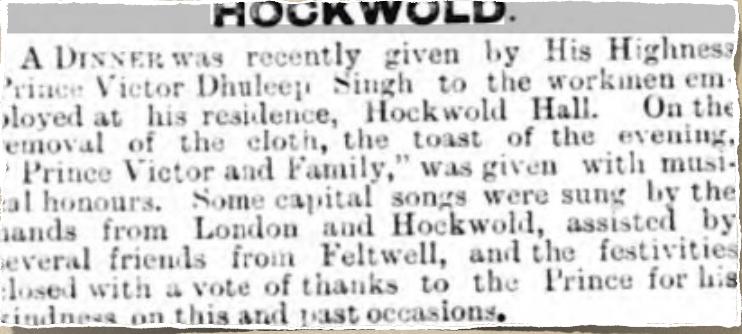
Thetford & Watton Times and People’s Weekly Journal, 16 Nov 1895
The Princes readily took on their responsibilities to Hockwold by: Distributing presents at Christmas 1894, Holding a dinner for those who had worked on the new extension to the Hall in 1895 and Hosting the ‘First Flower Show’ in the ‘picturesque grounds of Hockwold Park’ in August 1896.
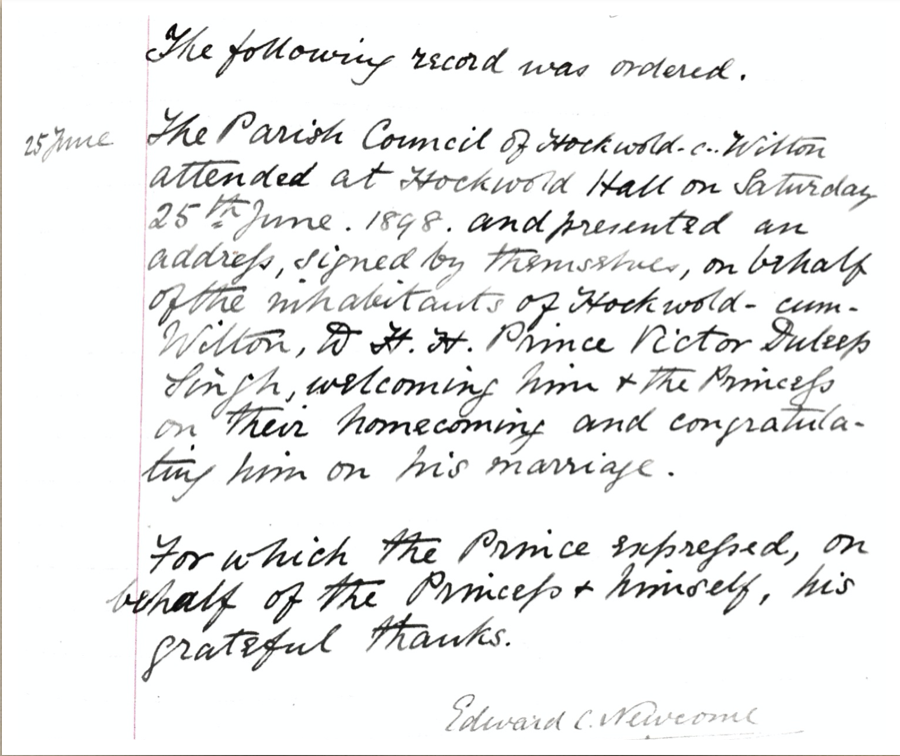
Parish.Council Minute 25 June 1898, Norfolk Records Office
“The Parish Council of Hockwold-cum-Wilton attended at Hockwold Hall on Saturday 25th June 1898 and presented an address, signed by themselves, on behalf of the inhabitants on Hockwold-cum-Wilton, to H.H. Prince Victor Duleep Singh, welcoming him & the Princess on their homecoming, and congratulating him on his marriage. For which the Prince expressed, on behalf of the Princess & himself, his grateful thanks”. Signed by Edward C Newcome, Chairman 1894-1910
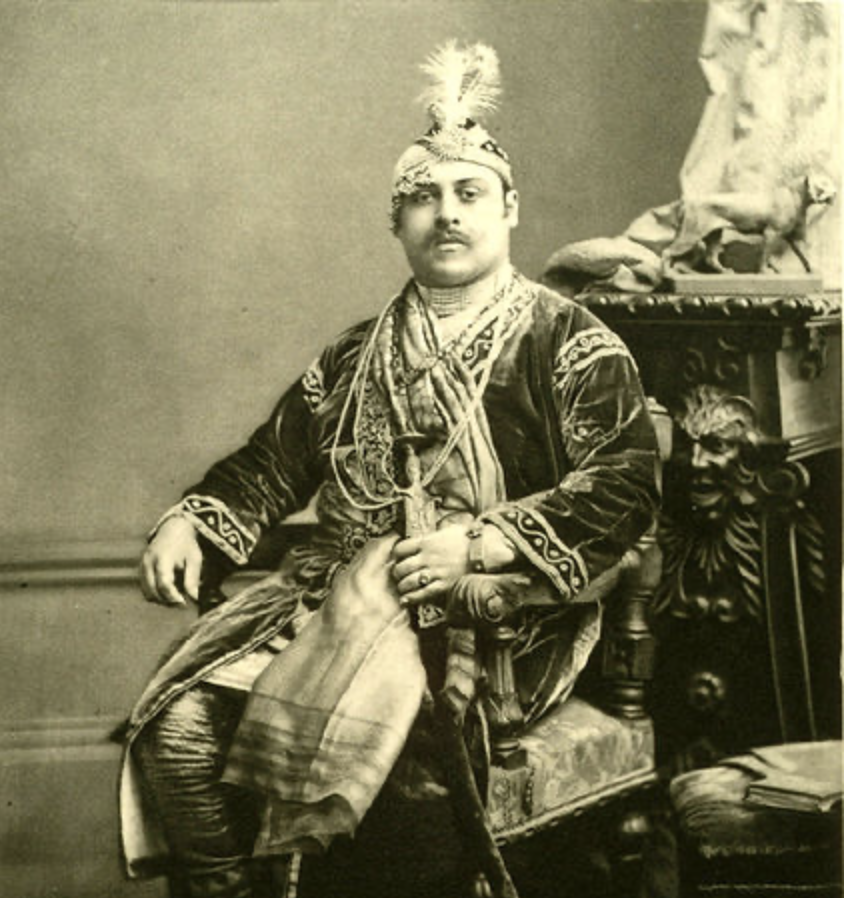
The Prince at the Devonshire House Ball in 1897
“The Hall, a Tudor pile… looks over a wide expanse of lawn, ornamented with fine old walnut trees, copper beeches and pink chestnuts…”. “view through the great reception hall… with its crimson leather furniture, old oak wainscoting… to the sunlit old English garden with its clipped yews and rose arches”. (From an interview with Prince Victor Duleep Singh reproduced in the The Bury and Norwich Post, 27-Sep-1898).

Hockwold Cross
In 1914, the Proceedings of the Prehistoric Society noted the base of a medieval cross in the grounds of Hockwold Hall, close by the drove from Hockwold along the “skirt lands” to Blackdike. This base has since been moved closer to the house, from its original location probably by the crossroads at the northeast corner of the manor
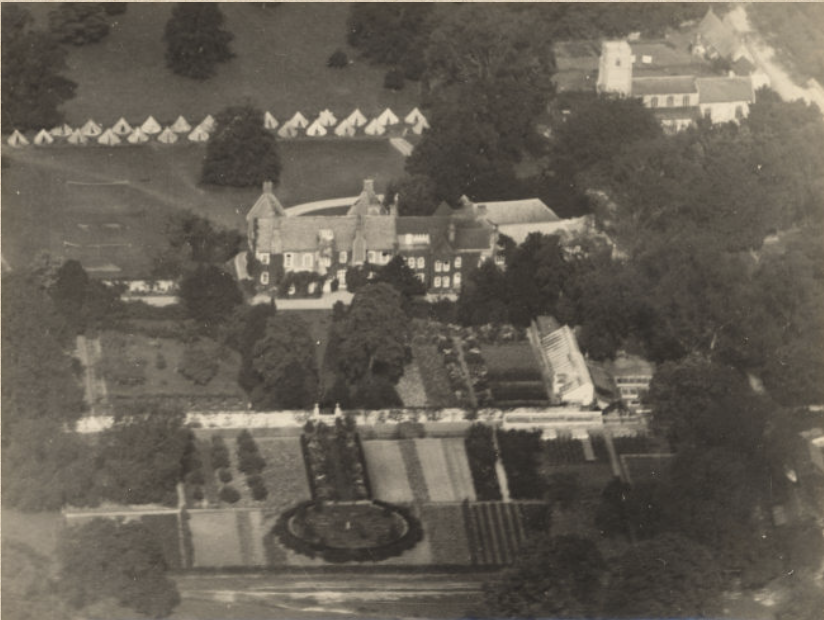
Hockwold Hall in 1918 with bell tents on the front lawn, and vegetables and fruit growing either side of the “banjo”
Prince and Princess Victor Duleep Singh spent WWI in Paris, and the Newcome family had no need of it. In 1918, the “Air Ministry” occupied the Hall, digging a new well there, whilst constructing an aerodrome at Feltwell. A 2ft gauge railway was constructed by Robert MacAlpine to the aerodrome up the road past the Hall, from Lakenheath Station.
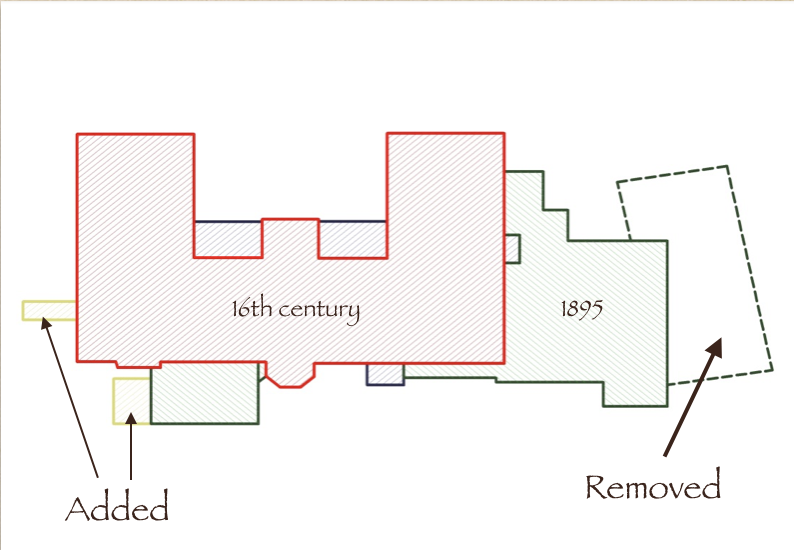
Part of the building evident in the 1918 photograph, joining the 1895 extension to the 1757 stable block is no longer there, except for remnants of its walls. It was probably removed by Sir Harry Peat as surplus to his needs. The east end of the house has been rendered and the ground floor converted to a garage, and a fire escape and an outside toilet added to west end.

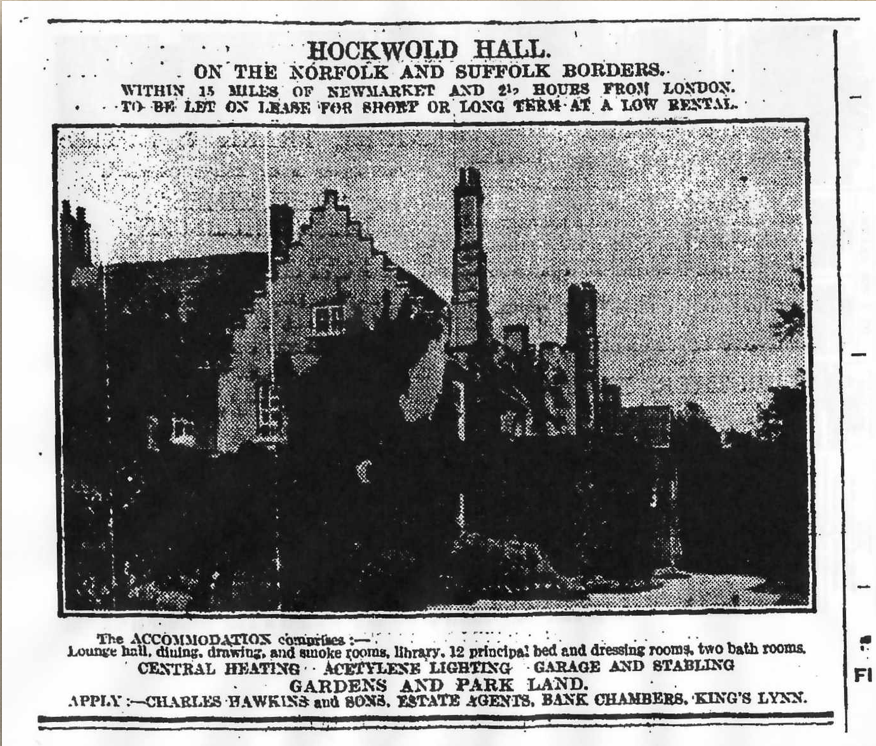
The Times, 26 July 1924
Hockwold Hall with the adjoining 3,143 acres of land was still owned by the Newcome Estate in 1931. But after 1918, it appears to have been empty or let. This 1924 advertisement offers it “at a low rental” with 12 principal bed and dressing rooms.
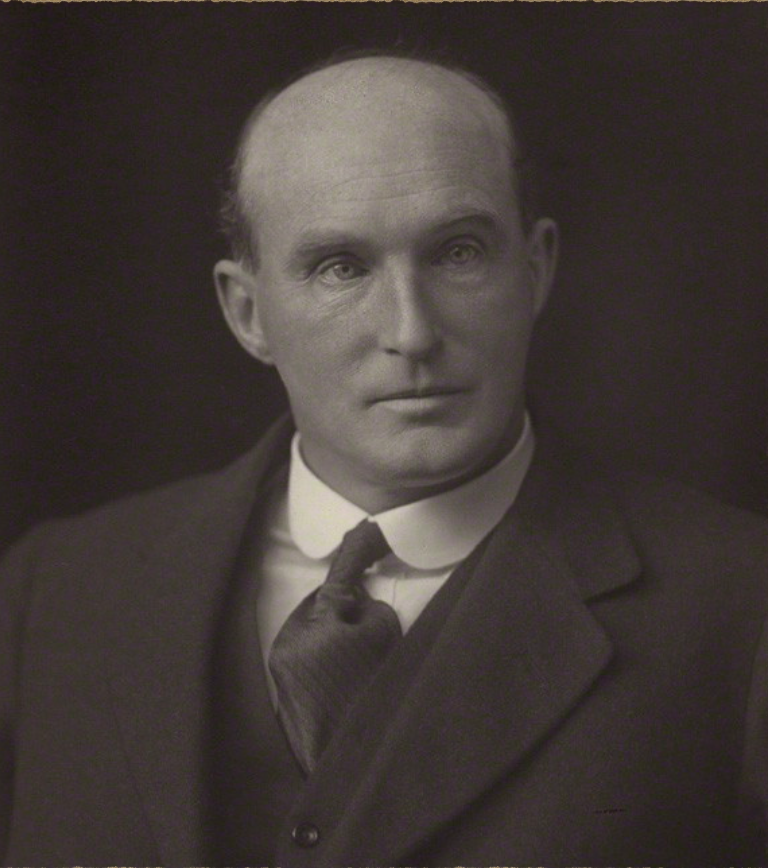
Sir ‘Harry’ William Henry Peat, 1925. National Portrait Gallery
Sir Harry Peat (born 1882) bought the Hockwold Hall in 1933 and the family had it until 1978. Until 1956, Sir Harry was Senior Partner of the accountancy firm Peat, Marwick, Mitchell & Co, that in 1991, became KPMG Peat Marwick (now simply KPMG), one of the “Big Four” international auditors. He was succeeded as Senior Partner (until 1966) by his brother Roderick Mackay Peat
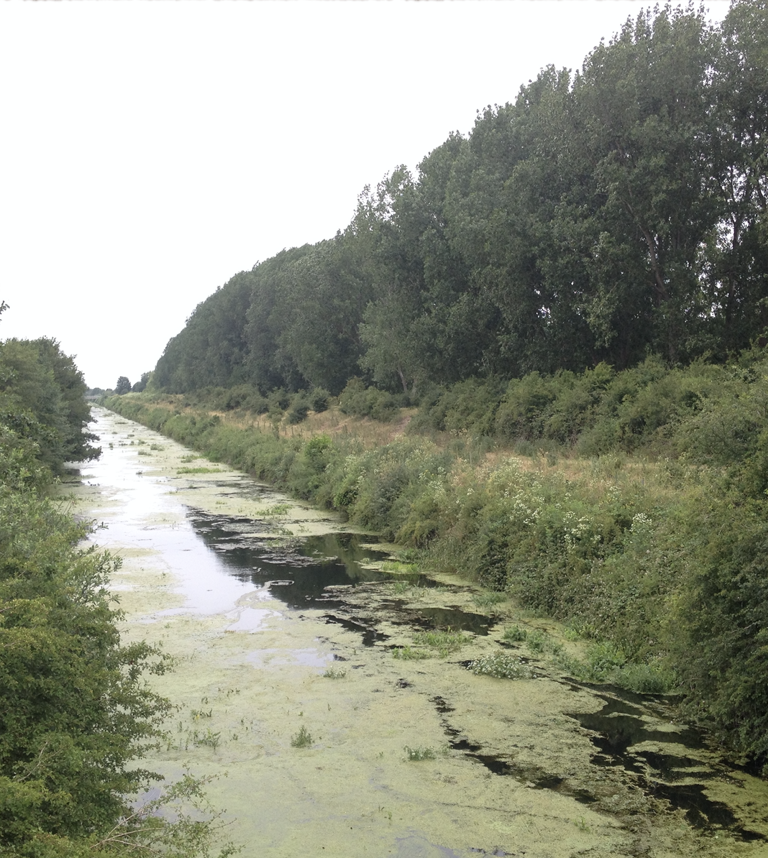
The spoil bank along the cutoff channel was purchased in 1966
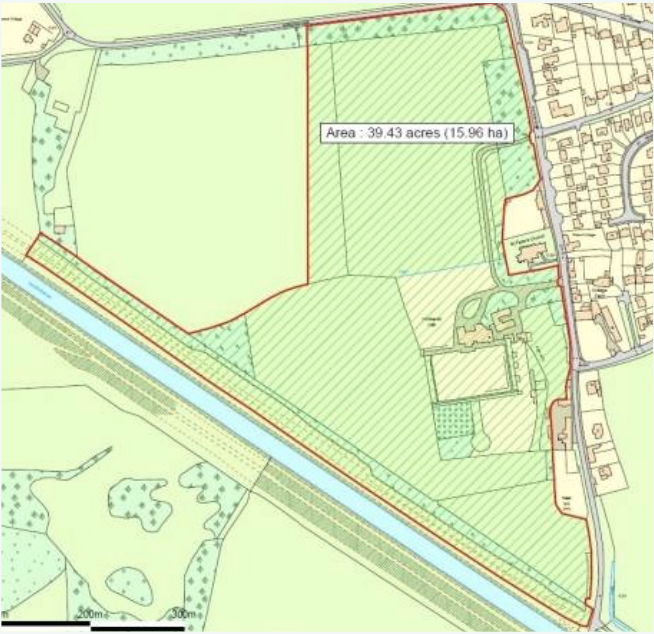
The present boundary of Hockwold Hall runs along the bank of the cut-off channel
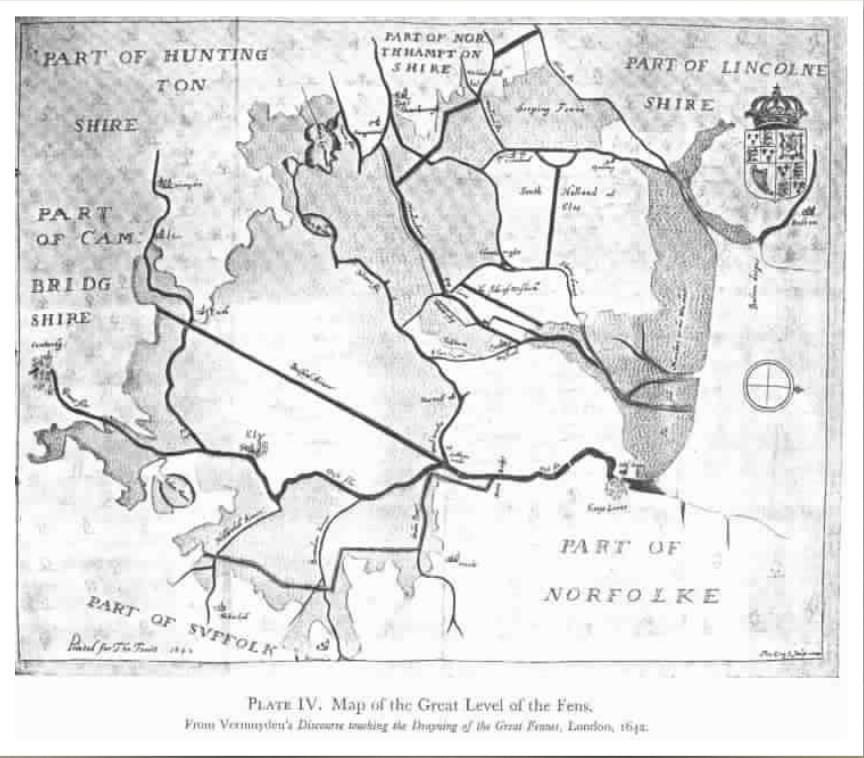
“Drayning of the Great Fennes”, 1642
The map faces west. The cutoff channel is at the bottom.
The cut-off channel was proposed originally by Sir Cornelius Vermuyden in 1642 to take the floodwaters of the Mildenhall and Brandon Rivers around the South Level and discharge the water safely into the Ouse downstream of the confluence of Denver Sluice. The money ran out before this could be built.
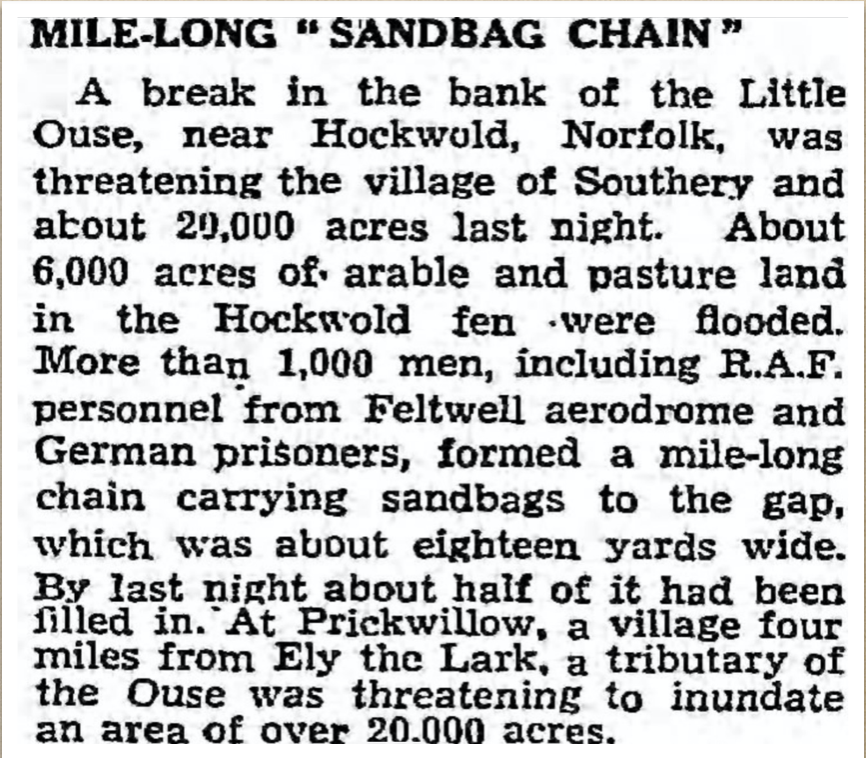
The Guardian, 19 March 1947
After a series of floods, Sir Murdoch MacDonald tried to resurrect Vermuyden’s scheme to drain the eastern tributaries of the Ouse around the South Level. After WWII and the 1947 floods, his firm was commissioned to design and supervise construction of the present channel, completed in 1968.
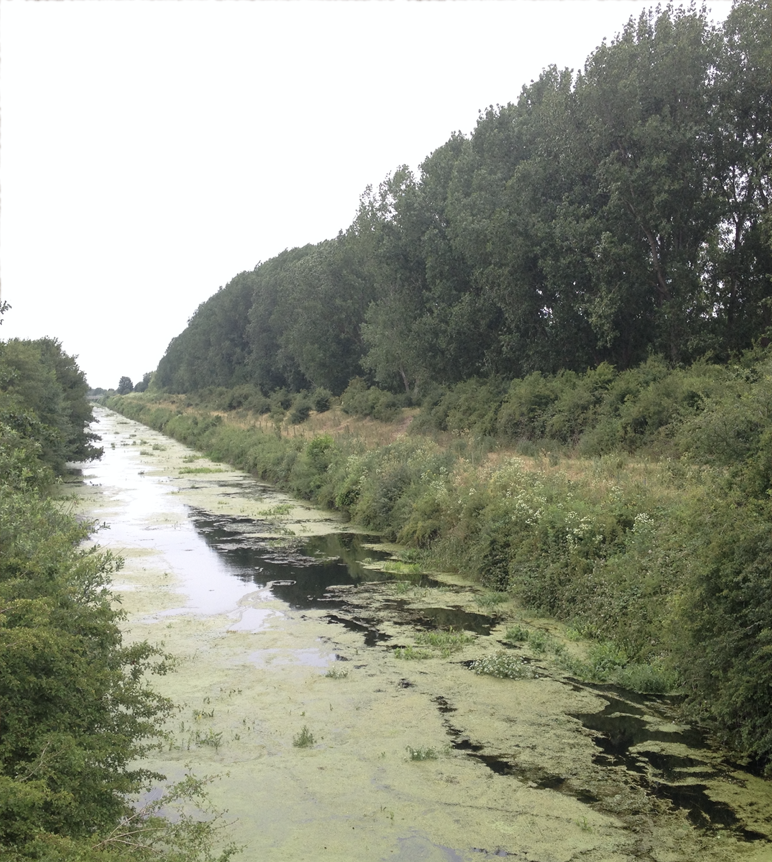
The Cut-off Channel was designed by Sir MacDonald & Partners to take flood water northwards, but its flat slope makes it possible also to convey water southwards from the Ouse at Denver as far as Hockwold. From there it is conveyed by tunnel and pipeline constructed 1978, to the head of the Essex river system. Therefore the water usually in the cut-off channel at Hockwold is Ely water destined for Essex.
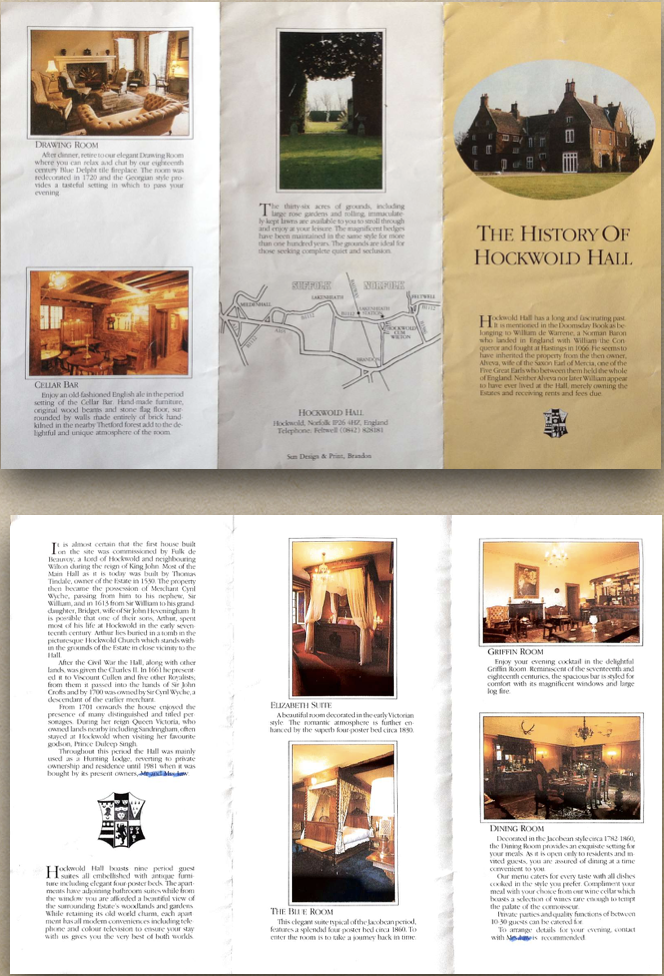
Brochure for the Law’s Hotel
On 30 May 1981, Philip Law moved into the Hall and obtained permission to operate it as hotel. In 1983, applications were made to build various extensions, a fish and chip shop and 16 dwellings, but these were never built. Chicago-born Law had worked in the finance office at Mildenhall Air Base up to 1977. After coming to Hockwold, he recruited two servicemen at Lakenheath in a scheme to defraud the USAF of up to $7 million. This was detected and Law sentenced at Ipswich Crown Court in 1984 to 5 years in prison.
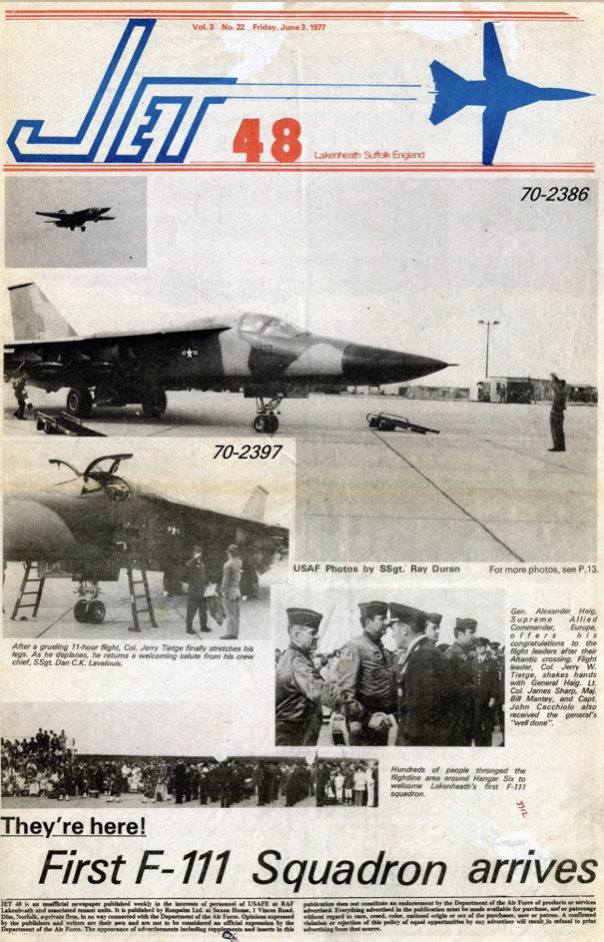
June 1977 issue
By September 1985, John and Gillian Nevin had taken over running the Hall, and immediately caused concern over the felling of trees. The Council imposed a Tree Preservation Order on 22 individual trees, 3 groups and an area of woodland. In November 1985, 14 new houses at Hockwold Hall were advertised in the “Jet 48” base newspaper. This was based on approval previously given to Mr Law, but only for 10 units as additional hotel accommodation, not for independent sale. None were built.
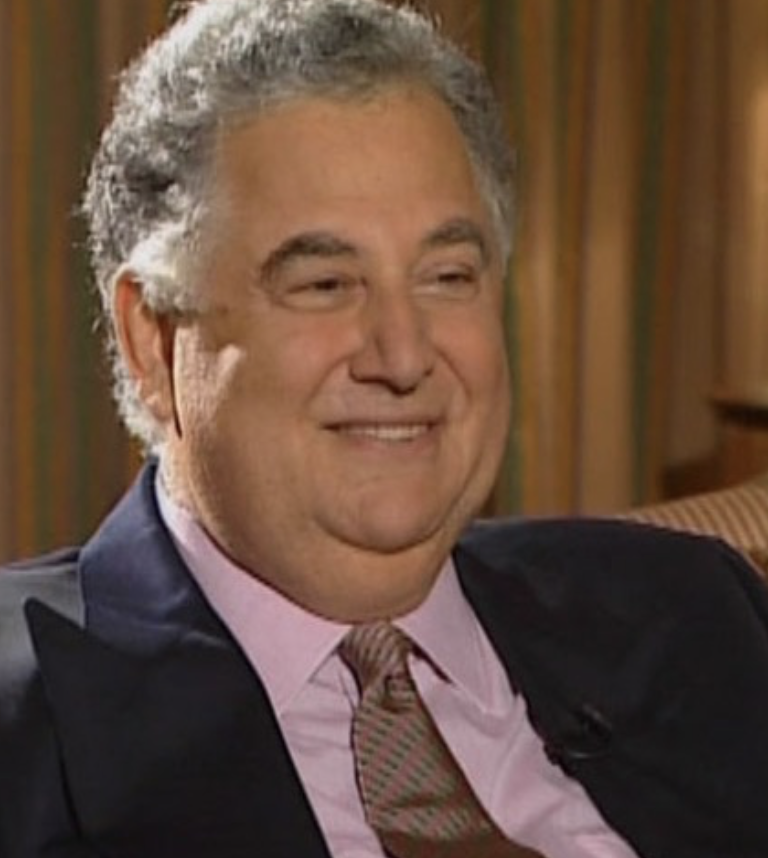
Nabil Chartouni
Formerly Vice-President of Holiday Inn Hotels in the Middle East, Mr Chartouni took over Hockwold Hall in poor condition and made many improvements during his ownership 1987-2002. A Lebanese businessman and major donor to the American University in Beirut, he visited the Hall in 2016. He made the present entrance and tree-lined driveway, and planted the cedars on the front lawn included the Cedar of Lebanon
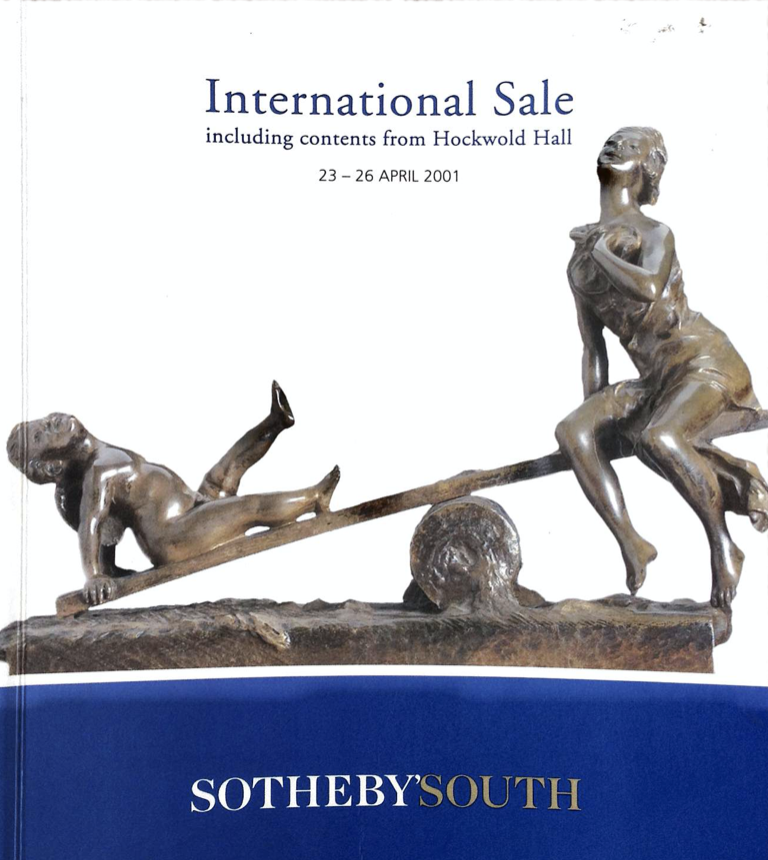
Mr Chartouni’s improvements, especially in new bathrooms and some furnishings are still in use at Hockwold. He found deeds and other papers belonging to the Rev William Newcome from 1613-1846, and deposited these with the Norfolk Records Office in 2001. His wife commissioned a sale of the fine furniture and other items, “sold for a pittance”
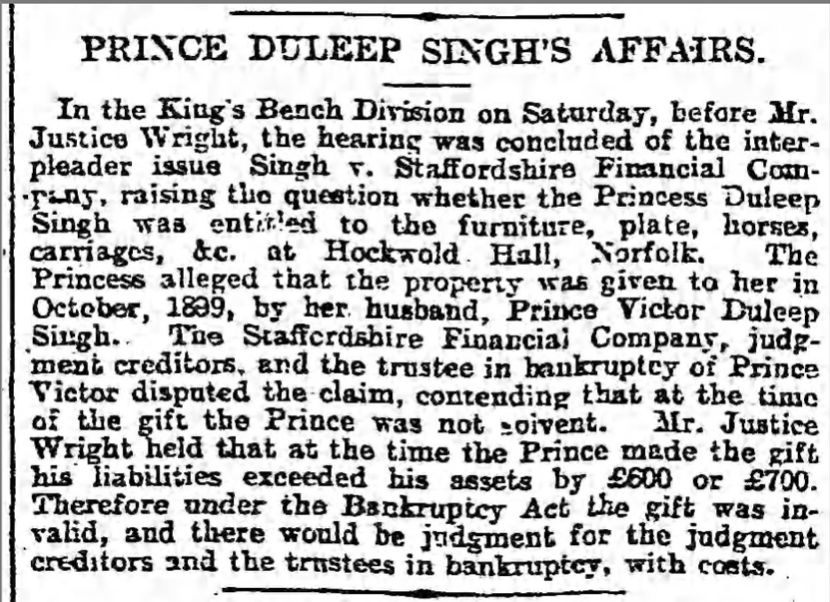
The Guardian (London), 16 Feb 1903
By 1900, bad investments and gambling debts overwhelmed Prince Victor. When Prince Victor was declared bankrupt on 4 September 1902. Hockwold Hall was given as his address. He fled to Paris, dying in Monte Carlo in 1918. Victor tried unsuccessfully to have the contents of Hockwold Hall declared Lady Anne’s property.